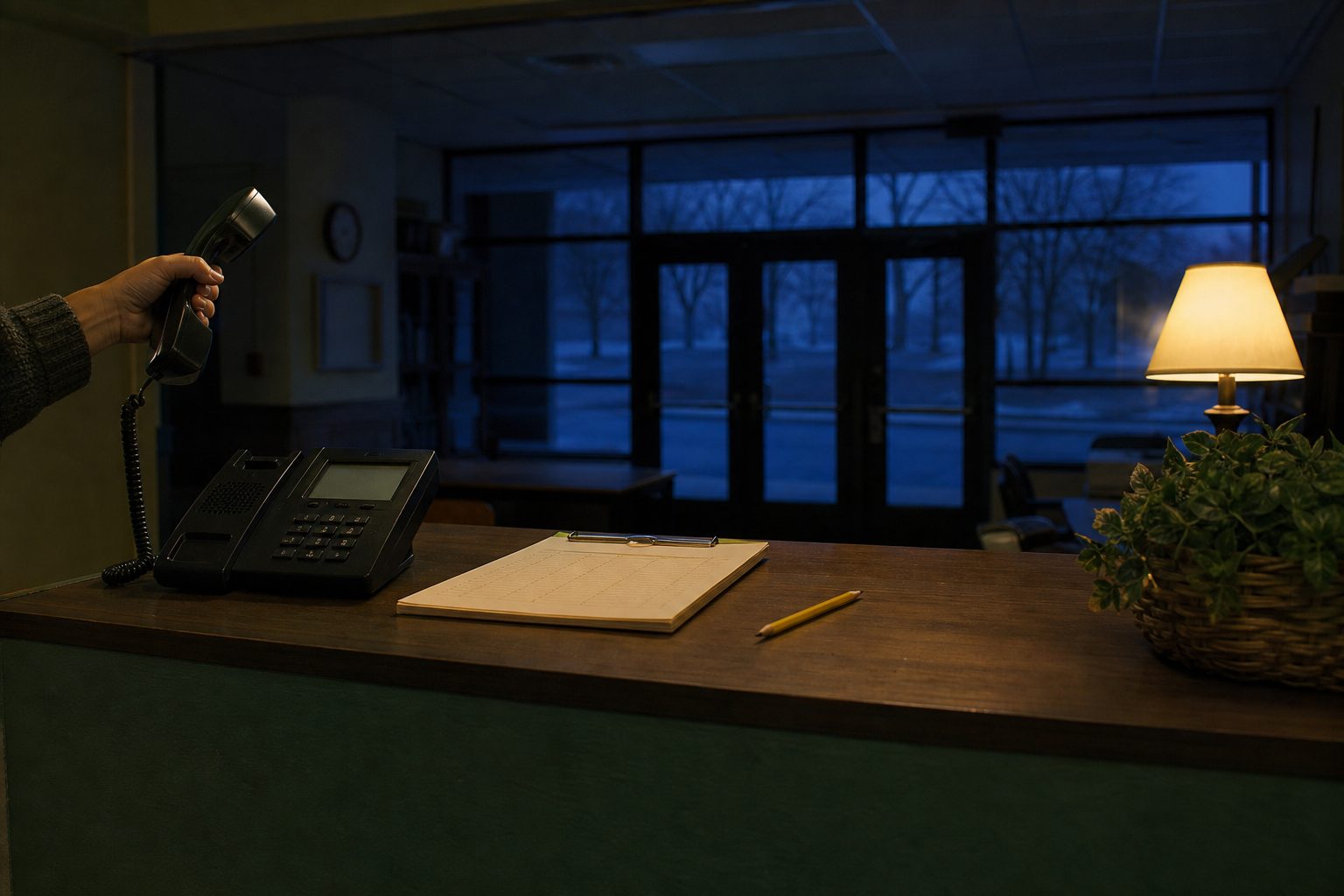
The 5:30 a.m. call and what the absence system does with it
Every school morning starts before the sun comes up for at least one person in the front office. When the phone rings between 5:30 and 6:00, it is rarely good news. A voice, sometimes hoarse, sometimes apologetic, explains that a teacher will not be in. Maybe it is the flu, a family emergency, or a flat tire. The absence gets logged into the system, most often by the person calling, sometimes by the office manager with one hand on their coffee and the other on the keyboard.
Most districts use an automated absence management tool. The system is supposed to handle the logistics: it records the absence, notifies the principal or designee, and posts the job to the substitute pool. Substitutes are notified by phone call, app alert, or email, depending on the system and their preferences. In theory, these systems should match every vacant classroom with a qualified substitute, but the reality is far less tidy during peak flu season or after a big district event.
When the system works, a substitute accepts the job within minutes, and the office can focus on other fires. But if the absence lands late or the substitute pool is already thin, the job lingers unclaimed as the clock ticks toward the first bell.
Keep reading: How to Write Emergency Sub Plans Any Adult Can Teach Cold
Watching a job still sit unfilled at 6:40
At 6:40, the day's roster is still incomplete. The office staff watch the absence dashboard, refreshing again and again. There is a pit in the stomach as the list of unfilled jobs holds steady. Sometimes the system sends out another round of notifications. Experienced office staff know which names are likely to answer, scanning for the handful of substitutes who pick up last-minute assignments.
There is a small window where a sub can still make it. If a job posts at 6:00, a substitute who lives nearby might be able to get dressed, grab a coffee, and arrive just before the first students. But in many cases, the clock runs out. Bus drivers start arriving, teachers on duty begin organizing breakfast lines, and the unfilled classroom becomes a problem for the building, not the system.
By 6:50, the principal or office manager starts making Plan B. The building needs to cover every group of students, no matter what. There is no waiting for the system to catch up.
Splitting a class: the mechanics and the contract limits
When no substitute arrives, the most common solution is to split the class. This means dividing the absent teacher's students among other teachers at the same grade level or subject. The office scrambles to check numbers. If a fourth-grade class has twenty-four students and three other teachers at that grade, each will take on eight extra students for the day.
Splitting is a logistical puzzle. Teachers have seating charts, lesson plans, and routines tailored to their own classes. Office staff must prepare a list of which students go where, update class rosters, and alert the cafeteria so lunch counts are accurate. Sometimes, the office prints new seating charts or walks down the hall with sticky notes and a clipboard.
Most union contracts set limits on how many students can be added to a class, and how often splitting can occur before overtime or stipends must be paid. In many districts, a teacher can only have their class split once or twice per grading period before triggering extra pay or a grievance. Some contracts require written notice or a log of how many times a teacher has absorbed extra students. All of this happens in the rush before the first bell.
If the contract caps are hit, schools must find another way. Sometimes, office staff find a paraeducator to cover the class, or the principal steps in. Every option has a domino effect on the rest of the day.
Keep reading: The Substitute Folder Checklist to Finish in the First Two Weeks
Who gets pulled first: interventionists, coaches, then the principal
When splitting a class is not possible, the building turns to support staff. The first wave to be pulled are usually interventionists, reading specialists, math tutors, or resource support staff. Their regular small groups or pull-out sessions are canceled, and they are sent to cover the vacant classroom.
If all interventionists are already covering, the next group are instructional coaches or counselors. These staff members often have flexible schedules and can step in for a day, but it means professional development or student support is put on pause. The principal or assistant principal is the last resort. When every other option is tapped, the principal takes the class, often splitting the day with the assistant principal if there are meetings or discipline to manage.
Each reassignment is a trade-off. Students lose out on interventions, and teachers are left without coaching support. The cost is not just in coverage, but in lost services and progress that must be made up later in the week.
The substitute who arrives and cannot find a folder
Once in a while, a substitute accepts the job and rushes in right before the bell. The office hands them the classroom key and points them in the right direction. But the substitute stands in an empty classroom, searching for the sub folder. There is supposed to be a binder or folder in every classroom with the day's plans, seating charts, emergency procedures, and rosters.
In reality, some folders are missing, out of date, or buried under piles of handouts. A substitute with no plans often improvises. They may start the day with a book from the shelf, or write a math problem on the board and hope for the best. This creates a rough start for students and adds stress for the substitute.
If the office catches the problem early, someone runs to the copy room and prints emergency lesson plans. Sometimes, a neighboring teacher shares worksheets or resources. But on busy mornings, there is not always time to prepare, and the substitute must manage with what they find.
See how ChalkHandoff handles this for k12 education
What the office writes down, and what never gets recorded
Every school has a system for tracking absences and coverage. The office records who was absent, which substitute took the job, and who covered if no sub was available. For split classes, the list of which students went to which teacher may be kept in a notebook or entered into the student information system.
Some schools keep a daily log for union reporting, especially if contract limits are close to being reached. Others rely on memory or informal notes. When interventionists or coaches are pulled, that information is sometimes tracked for Title I or special education purposes, but not always. Many small acts of coverage, office staff watching a class for twenty minutes, or a librarian stepping in for a period, are never officially logged.
This patchwork record-keeping makes it hard to see the true impact of unfilled substitute jobs. The paper trail exists for payroll and compliance, but the daily disruptions and lost instructional time are harder to quantify.
The costs that surface in next month's payroll
The financial impact of unfilled substitute jobs shows up weeks later. When teachers split classes, their contracts often require extra compensation in the form of stipends. Interventionists and coaches who cover classes may be paid at a different hourly rate or receive additional duty pay. Payroll calculates these extras based on the office logs, time sheets, or notes kept during the rush of coverage.
There are other hidden costs. When intervention groups are canceled, students who need extra support fall behind. Coaches and counselors lose time for planning and student meetings. The principal spends more time in the classroom and less on building management or family outreach.
Budget managers see the numbers add up. In some schools, a single bad flu week can lead to several thousand dollars in stipends and overtime. The ripple effect is felt in budget meetings when funds must be shifted to cover unplanned payroll expenses.
Beyond dollars, there is the cost to morale. Teachers who repeatedly absorb extra students may feel burned out. Support staff pulled from their primary roles find it harder to meet their goals. Each unfilled substitute job creates a web of disruptions that stretches long after the initial absence.
The morning scramble to cover classes is a familiar dance in every school office. Reliable tools that support clear sub plans, up-to-date seating charts, and organized coverage records can make these mornings less chaotic. Systems that allow teachers to reuse sub plan templates and prepare handoff packs help substitutes start strong, even in a rush. When details are easy to find and coverage is tracked, everyone in the building can focus more on students and less on scrambling for solutions.